
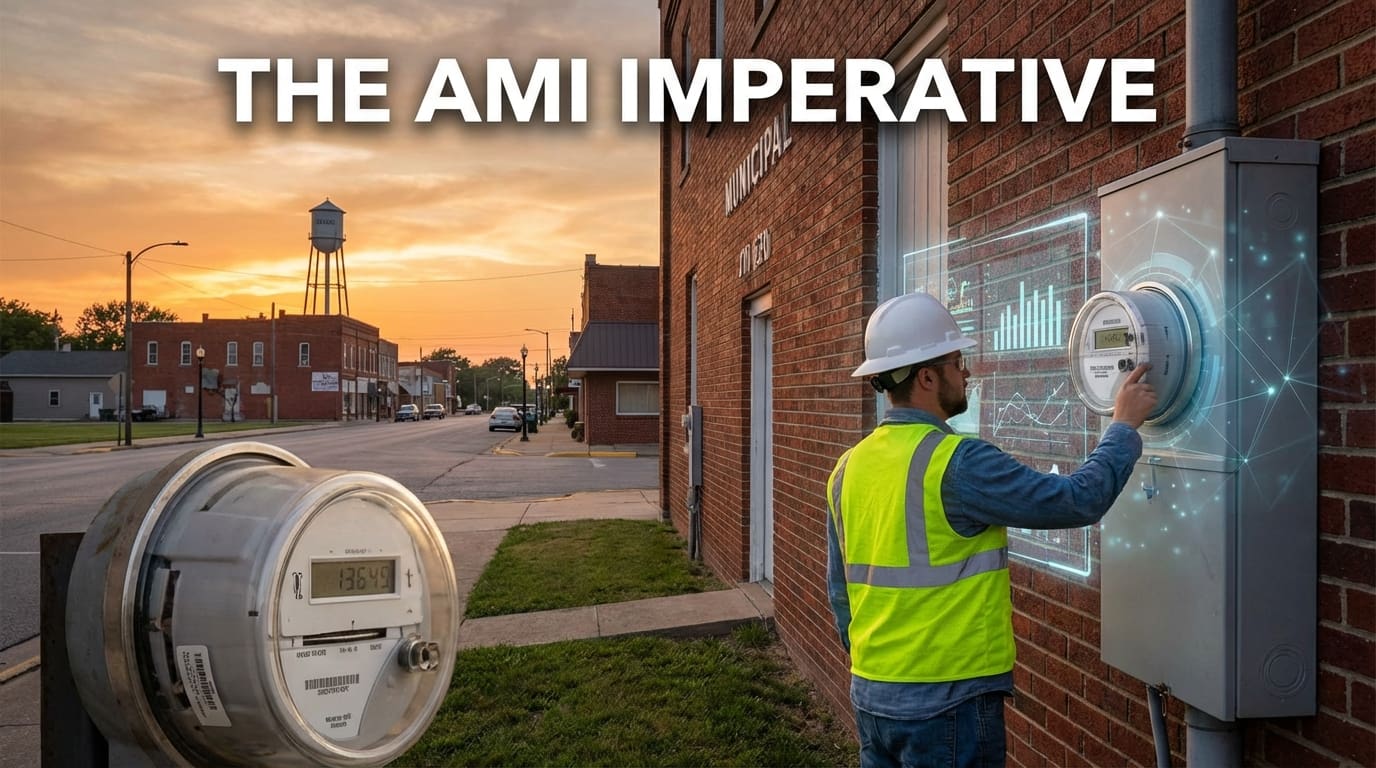
- Advanced Metering Infrastructure (AMI) is critical for small utilities to reduce Non-Revenue Water (NRW) and enhance System Resilience by providing high-frequency, bidirectional data for proactive leak detection and management.
- Successful deployment requires navigating significant financial barriers (high capital costs). Utilities must secure targeted funding (SRF loans/grants) and justify investment using rigorous Cost-Benefit Analysis (CBA) based on NRW and labor savings.
- AMI integration mandates strict adherence to Data Security and Ethical standards, requiring the implementation of Privacy by Design (PbD) principles and clear Regulatory Frameworks to protect sensitive consumer data and maintain social acceptance.
Table of Contents
- The AMI Imperative: Reducing Non-Revenue Water
- The Role of Advanced Metering Infrastructure in System Integrity
- Addressing Water Loss and System Resilience
- Navigating Financial and Technical Adoption Barriers
- Ensuring Data Security and Ethical AMI Deployment
- Strategic Steps for Responsible AMI Deployment
- Frequently Asked Questions Regarding AMI Deployment
The AMI Imperative: Reducing Non-Revenue Water
Implementing Advanced Metering Infrastructure (AMI) provides the detailed data required to identify leaks, unauthorized use, and meter inaccuracies in near real-time. This high-frequency meter data transforms reactive maintenance into pressure modulation strategies operational planning. This is a huge step in addressing the issue of Non-Revenue Water (NRW) – one of the biggest challenges for small water systems.
The Role of Advanced Metering Infrastructure in System Integrity
The implementation of Advanced Metering Infrastructure (AMI) is necessary for modernizing existing distribution networks. AMI provides bidirectional communication, moving beyond Automated Meter Reading (AMR) capabilities.
This transition yields High-Frequency Meter Data essential for operational efficiency and systematic review of water loss. Deploying AMI is the foundational step for achieving System Resilience and integrating the utility into the broader Smart Grid concept.
Defining Core System Components
Successful AMI integration requires three critical elements. Understand these components to ensure the infrastructure supports data integrity and utility goals.
- Smart Meters: These devices replace legacy mechanical meters. They record consumption data at sub-hourly intervals. Use this granular data for rapid leak identification and distribution optimization.
- Communication Network: This infrastructure securely transfers High-Frequency Meter Data from the meter to the utility office. Common technologies include cellular, licensed radio, or robust RF mesh systems (e.g., those offered by vendors like Sensus).
- Meter Data Management (MDM) System: This software platform processes, validates, and stores the massive data volumes generated by the AMI network. Accurate MDM is crucial for billing, system analytics, and ensuring Data Security and Privacy. Structurally, these platforms share architecture with those used by Energy Utility Systems.
Addressing Data Security and Ethical Considerations
The volume of data generated by Smart Meters introduces new requirements for Data Security. Utilities must implement stringent protocols to protect customer information and maintain system integrity.
High-frequency data collection mandates a focus on Privacy Concerns. Ensure that your deployment adheres to robust Regulatory Frameworks and integrates Privacy by Design (PbD) principles from the initial planning stages.
Failure to address these Ethical Considerations regarding data handling risks undermining Social Acceptance of the AMI project within the community.
Addressing Water Loss and System Resilience
Advanced Metering Infrastructure (AMI) provides the technical foundation required to minimize water loss. Water loss is the primary financial drain on small water systems. Deploying Smart Meters shifts operations from reactive repairs to proactive infrastructure management. This capability significantly enhances overall System Resilience.
Systematic review data published via sources like Elsevier and indexed on Web of Science and Scopus consistently validate that High-Frequency Meter Data is the prerequisite for effective leak detection algorithms. This documentation supports the financial justification required for comprehensive AMI integration.
Rapid data collection enables the immediate identification of consumption anomalies. These signals often indicate leaks or unauthorized use. Utilize the following steps to leverage AMI for effective premise side leak detection:
- Step 1: Baseline Establishment: Collect 30 days of High-Frequency Meter Data. Establish normal customer consumption profiles. Analyze usage patterns to separate intermittent use from continuous flow.
- Step 2: Threshold Setting: Define tolerance limits for continuous flow. Configure the system to flag any residential meter registering flow above a defined minimum threshold (e.g., 0.05 gallons per minute) for a sustained period, typically 24 hours.
- Step 3: Alert Generation: Configure the Meter Data Management (MDM) system to generate automated alerts. Integrate these alerts directly into work order management systems.
- Step 4: Customer Notification and Ethical Challenges: Utilize the AMI system’s communication channel to notify water customers immediately. This quick action reduces both customer cost and utility water loss, improving Social Acceptance.
Data Security and Privacy Concerns
The collection of high-resolution data inherent in Advanced Metering Infrastructure requires strict adherence to Regulatory Frameworks. While focused on water, AMI integration is fundamentally aligned with the broader Smart Grid initiative impacting Energy Utility Systems and Energy Consumers nationwide.
Addressing Ethical Challenges related to Data Security and Privacy Concerns is mandatory for Responsible Deployment. Implement the principles of Privacy by Design (PbD) immediately upon system activation. Ensure all data transmission uses advanced protection approaches.
Utility managers must develop adaptive frameworks to ensure Equitable Deployment. Consideration of vulnerable populations and Equity Considerations must guide policy development and Stakeholder decision making regarding data access and consumer notification protocols.
Navigating Financial and Technical Adoption Barriers
The requirement for a substantial initial capital investment is the most significant financial consideration for small utilities deploying Advanced Metering Infrastructure (AMI). While enhanced System Resilience and reduced operational costs are established long-term benefits, securing system financing can be challenging, especially for small systems.
Small municipalities frequently lack the necessary bonding capacity or sufficient rate base to absorb the upfront cost of Smart Grid components. This financial hurdle necessitates strict adherence to investment justification protocols.
Cost-Benefit Analysis and Effective Useful Life (EUL)
Perform a rigorous financial analysis. This must quantify the Effective Useful Life (EUL) of the new assets. Calculate savings derived from reductions in Non-Revenue Water (NRW), labor, and vehicle operating costs.
The American Council for an Energy Efficient Economy (ACEEE) stresses establishing transparent Regulatory Frameworks. These frameworks enable utilities to recoup investment based on validated efficiency gains and Demand Response Offerings.
Evaluate the Total Cost of Ownership (TCO) across the expected lifecycle for both legacy and advanced systems. Factor labor savings from eliminating manual reads into the analysis. Quantify the recovered water value realized through accurate High-Frequency Meter Data analysis.
Technical Planning: Data Security and AMI Integration
Technical adoption barriers extend beyond initial capital outlay. Successful AMI integration requires robust planning for data management and security protocols.
Ensure the proposed system supports high-volume, real-time data transmission and analysis. Utilities must address potential Data security issues and Privacy concerns proactively during system design.
Implement standard practices such as Privacy by Design (PbD) during system development to ensure Responsible deployment. Collaborate via Interdisciplinary collaboration with IT specialists to utilize Adaptive frameworks for advanced protection approaches.
Address the ethical challenges inherent in collecting granular usage data. Compliance with existing Regulatory Frameworks is mandatory to maintain Social acceptance and protect Vulnerable populations.
| Metric | Legacy Automatic Meter Reading (AMR) | Advanced Metering Infrastructure (AMI) |
|---|---|---|
| Data Collection Frequency | Daily or Monthly drive-by | Hourly or 15-minute intervals (High-Frequency Meter Data) |
| Communication Type | One-way (Outbound reading) | Two-way (Reading and remote service control) |
| Installation Cost per Meter (Average 2026) | $75 to $150 | $150 to $350 |
| Leak Detection Capability | Low, requires manual analysis | High, automated alarming and location pinpointing |
| Labor Cost for Reads | High (Requires dedicated field staff and vehicles) | Negligible (Remote operation) |
The shift to Smart Meters requires addressing Equity considerations across all phases of deployment to ensure benefits are distributed fairly among all Energy consumers served by the Energy utility systems.
Ensuring Data Security and Ethical AMI Deployment
The deployment of Advanced Metering Infrastructure (AMI) requires rigorous management of customer data. Integration of these Smart Meters into the broader Smart Grid introduces specific Data security issues that must be mitigated proactively.
High initial capital investment is often cited as the primary obstacle, but small utilities must equally address the complex Ethical challenges associated with monitoring consumer behavior.
Managing High-Frequency Meter Data and Privacy Concerns
AMI systems generate High-Frequency Meter Data containing sensitive consumption patterns. This granularity raises significant Privacy concerns and demands strict adherence to security protocols.
Responsible deployment mandates a comprehensive Systematic review of all security architecture before system activation. Failure to secure this data exposes the utility to regulatory penalties and erodes necessary acceptance by the customer base.
Implementing Privacy by Design (PbD) Protocols
Utilities must operate within established Regulatory frameworks while implementing advanced protection approaches. Consult best practices derived from industry organizations, such as American Water Works Association (AWWA), to guide Policy development.
The principle of Privacy by Design (PbD) must be foundational to the technology selection process, rather than an added feature. PbD ensures that Data Security and Privacy are prioritized in the initial system architecture.
Achieving customer acceptance requires proactive engagement with consumers to address Ethical considerations regarding household monitoring. This transparent approach maintains public trust, critical for the success of any AMI deployment.
Instructional Steps for Advanced Protection Approaches
- Mandate Data Minimization: Collect only the necessary data points required for operational efficiency, billing, and system optimization. Justify any collection of highly granular data based on explicit business needs, such as specific Demand Response Offerings.
- Utilize Privacy Preserving Techniques: Aggregate and anonymize data before using it for broader system optimization studies or public reports. This practice mitigates Ethical considerations related to individual tracking and maintains consumer trust.
- Enforce Access Control and Encryption: Implement strict internal controls to limit staff access to raw, unmasked data. Require multi-factor authentication (MFA) for the Meter Data Management (MDM) system and ensure all data transmission employs end-to-end encryption across the Smart Grid network.
- Establish Adaptive Frameworks: Develop clear, written policies detailing data retention periods, access logs, and procedures for responding to data breaches. Ensure these policies align with all applicable Regulatory frameworks and incorporate guidelines from organizations like the American Council for an Energy Efficient Economy (ACEEE).
- Ensure Interdisciplinary Collaboration: Engage IT security specialists, legal counsel, and operational staff in Stakeholder decision making. This collaboration guarantees that the system meets technical requirements while adhering to Ethical considerations and legal mandates.
Selecting Secure AMI Vendors
When procuring Smart Meters and supporting infrastructure, evaluate vendor security profiles. Reputable AMI vendors, such as Sensus, offer documented security certifications and established protocols for firmware updates and patch management. Demand vendor transparency regarding their handling of customer data and their compliance with Data security standards.
Ensure the chosen AMI integration platform supports future upgrades and maintains flexibility to adapt to evolving Ethical considerations and Regulatory frameworks.
Strategic Steps for Responsible AMI Deployment
Achieve successful and equitable deployment by leveraging external resources.
Offset internal resource limitations through structured planning and active Interdisciplinary collaboration.
Implementing Collaboration and Funding Strategies
Small municipal utilities must proactively address technical implementation barriers. Integrate external expertise to manage complex requirements related to AMI integration and system resilience.
- Define Interdisciplinary Collaboration: Engage specialized consultants immediately. Utilize GIS experts for spatial data management, optimal network placement, and assessment of infrastructure vulnerability. This supports responsible deployment planning.
- Secure Funding Pathways: Systematically pursue federal and state funding specifically targeted at Advanced Metering Infrastructure (AMI) modernization. Consult the American Council for an Energy Efficient Economy (ACEEE) for guidance on efficiency project financing related to Smart Grid initiatives.
- Select Proven Vendors: Choose technology partners (e.g., Sensus) based on proven track records in environments similar to small utility systems. Ensure the chosen platform facilitates seamless AMI integration and provides robust technical controls to mitigate Data security issues. Prioritize support for future scalability.
- Implement Pilot Programs: Define a limited geographical area (e.g., 500 meters) for initial system testing. Validate projected Non-Revenue Water (NRW) savings and refine operational procedures before full-scale deployment. Use these results to finalize the financial business case and proactively address potential Ethical challenges.
Establishing Governance and Policy Frameworks
Effective Policy development must precede system activation. This ensures utility readiness to manage the influx of high-frequency meter data and maintain high levels of social acceptance.
Develop comprehensive local Regulatory frameworks to govern data access and use. These frameworks must specifically address customer Privacy concerns and outline procedures for addressing Equity considerations during rollout.
Implement a systematic review process for all operational procedures. This ensures alignment with the utility’s commitment to responsible deployment and sustained compliance with all relevant Data security protocols.
Frequently Asked Questions Regarding AMI Deployment
What is the primary difference between AMR and Advanced Metering Infrastructure (AMI)?
Advanced Metering Infrastructure (AMI) establishes a two-way communication network. This allows the utility to transmit commands (e.g., remote shutoff) and simultaneously receive High-Frequency Meter Data.
Automated Meter Reading (AMR) is generally one-way, requiring physical or drive-by collection. AMI facilitates complete Smart Grid integration and enables advanced Demand Response Offerings.
How do small utilities secure financing for Advanced Metering Infrastructure projects?
Secure financing by leveraging low-interest State Revolving Fund (SRF) loans or targeted federal infrastructure grants. Investigate opportunities for public-private partnerships.
Crucially, justify the investment. Validate the Return on Investment (ROI) through quantified Non-Revenue Water (NRW) reduction and demonstrable labor savings. Align the Cost-Benefit Analysis (CBA) with existing Regulatory Frameworks.
What are the critical Ethical Considerations for high-frequency AMI data?
The primary concerns involve Data Security and Privacy and ensuring Social Acceptance. High-frequency data tracks detailed consumption patterns, which raises Privacy concerns regarding household routines.
Implement Privacy by Design (PbD) principles during system development. Ensure robust encryption and access controls. Equitable deployment must prioritize the needs of Vulnerable Populations to maintain public trust.
Does Advanced Metering Infrastructure improve System Resilience?
Yes. AMI enhances System Resilience by delivering real-time operational status, pressure readings, and fault isolation data. This immediate feedback loop is critical for proactive management.
Quickly isolate system faults and manage pressure transients. This capability minimizes service disruption and supports integration with broader Energy Utility Systems management protocols.
Where can I find reliable research on AMI implementation, benefits, and Ethical Challenges?
Consult peer-reviewed databases for Systematic Review data. Access platforms such as Elsevier, ScienceDirect, Web of Science, and Scopus for technical reports on financial viability and Advanced Protection Approaches.
Review industry reports from organizations like the American Council for an Energy Efficient Economy (ACEEE) and the Mission:data Coalition. This research aids informed Stakeholder decision making and Policy development regarding AMI integration.
Ensure your implementation plan addresses the Ethical considerations associated with granular data collection before deployment.
References
- Ethical considerations in advanced metering infrastructure integration
- [PDF] Advanced Metering Infrastructure and Customer Systems: Results …
- [PDF] ADVANCED METERING INFRASTRUCTURE
- Falling out of love with AMI: Why we need a new approach to smart …
- Security Management for an Advanced Metering Infrastructure (AMI …