
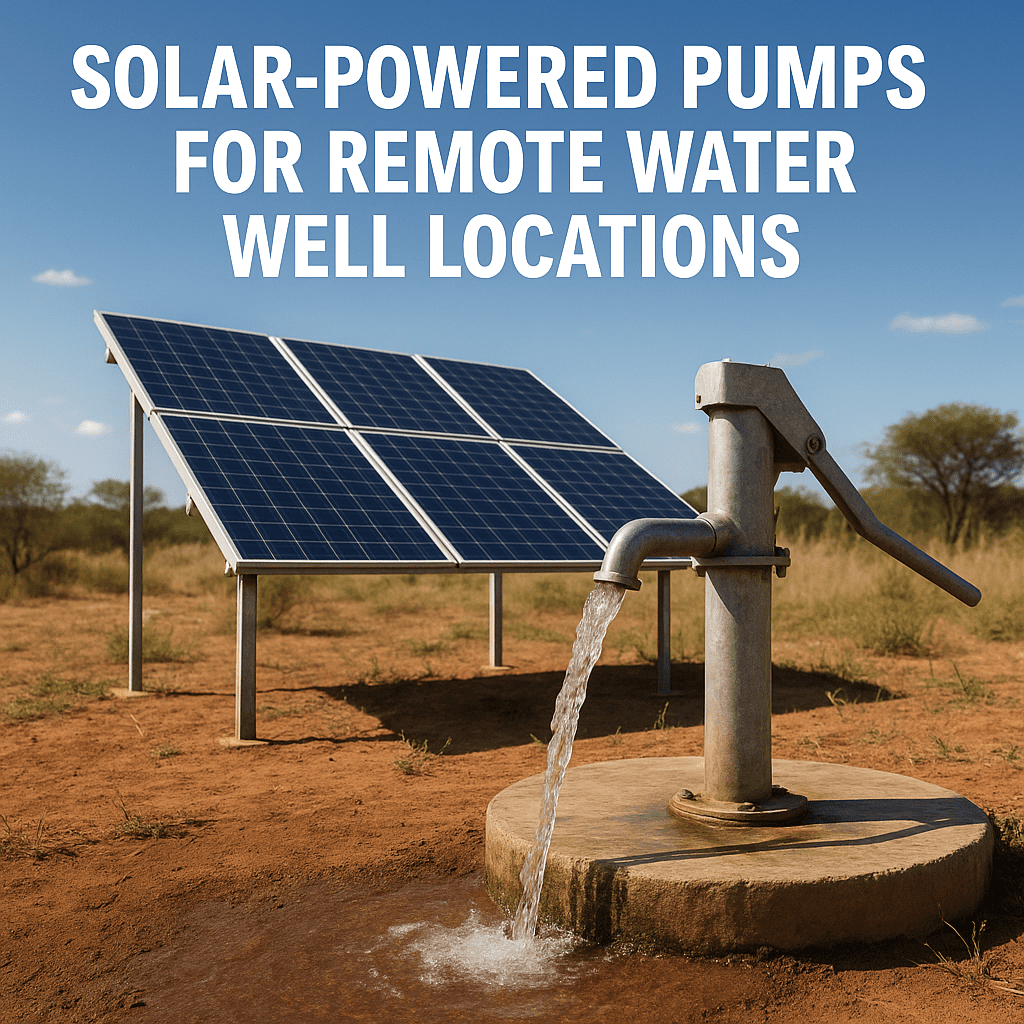
- Solar-powered pumps provide guaranteed water assurance and utility grid independence for remote well locations, serving essential needs like livestock watering and irrigation systems.
- Proper system design requires accurate pump sizing based on the Total Dynamic Head (TDH); modern solar submersible pumps can operate effectively up to 1000 feet of head.
- Solar pumping systems are highly cost-effective, eliminating fuel or electricity costs. The photovoltaic array components typically last 25 years, ensuring a rapid return on investment (ROI).
- Water assurance is typically achieved by storing pumped water in a storage tank during daylight hours, minimizing the need for expensive optional battery banks.
Table of Contents
- Solar Pumping Solutions for Remote Well Locations
- Selecting the Appropriate Solar Water Pump
- Financial and Technical Assessment of Solar Pumping Systems
- Components of a Solar Water Pumping System
- System Requirements: Hydraulic Head and Pump Sizing
- Advantages and Cost-Effectiveness of Solar Well Pumps
- Implementing Solar Power for Specific Applications
- Selecting a Trusted Solar Pump Kit
- Frequently Asked Questions
Solar Pumping Solutions for Remote Well Locations
Remote well locations often lack practical access to the utility grid. Extending traditional power lines over significant distances is frequently cost-prohibitive or physically impractical. Implementing solar powered pumps provides robust water assurance and utility grid independence.
This approach leverages photovoltaic panels to power various types of solar well pumps, establishing a highly cost-effective pump system critical for American land management and decentralized water supply.
Operational Benefits and Lifespan
Solar pumps significantly reduce long-term operational costs compared to generator-based or grid-extension solutions. For hydraulic volumes up to 800,000 gallons per day, solar panels for water pumping are demonstrably less costly than standard alternatives.
These green energy systems offer exceptional long-term reliability. The solar array component typically maintains a lifespan of around 25 years, ensuring sustainable water delivery for applications such as livestock watering and irrigation systems.
Selecting the Appropriate Solar Water Pump
The appropriate pump sizing is determined by the total dynamic head and required flow rate. Solar systems offer an array of options, including solar submersible pumps for deep well pump applications and solar surface pumps for shallow lifts or transfer duties.
Maximum Depth and Hydraulic Head Capabilities
Choosing the correct equipment involves calculating the required hydraulic head. Solar submersible pumps are engineered for demanding conditions.
Current technology allows high-performance solar water pumps to operate effectively with up to 1000 feet (ft) of hydraulic head. Specific models, such as the THS Series offered by Tuhorse solar pumps, are capable of lifting water from wells up to 230 ft.
For shallower water sources, such as ponds or cisterns, the HERO Solar Well Pump can run efficiently in wells of 4 inches diameter or larger, submerging up to 100 feet.
Flow Rates and Daily Water Output
Flow rate dictates the daily water output capacity for irrigation pumps or storage tank filling. On peak sunny days, larger RPS solar pump models can produce over 16,000 gallons of water.
For smaller systems, flow rates such as 91 Gallons Per Hour (GPH) at 24VDC are common. A standard 240 Watt (W) solar pump kit can generate approximately 760 gallons daily, fulfilling typical residential or small-scale livestock watering needs.
Consulting an RPS Pump Sizing Specialist ensures your complete kit meets the required water assurance demands and optimizes the use of optional batteries for nighttime operation.
Cost-Effectiveness and Long-Term Savings
The primary financial advantage of installing solar powered pumps is the elimination of ongoing costs associated with grid electricity or diesel fuel consumption. This positions them as highly cost-effective pump solutions in the USA.
While the initial investment in a solar pump kit, including the photovoltaic panel and solar water pumping control, is necessary, the long-term savings are substantial. Providers like RPS Solar Pumps offer robust support, often including a two-year warranty for reliability.
This rapid return on investment, combined with services like the Water Assurance Plan™, makes solar well pumps the optimal modern replacement for older, high-maintenance systems, such as windmill replacement installations.
Financial and Technical Assessment of Solar Pumping Systems
Remote well locations require guaranteed water assurance, especially for American land management operations involving livestock watering or extensive irrigation systems. Extending the utility grid is often cost-prohibitive due to extensive trenching, wiring, and connection fees. Implementing solar powered pumps establishes immediate utility grid independence.
Solar well pumps provide superior long-term financial performance by eliminating ongoing operational costs associated with diesel generators or expensive grid electricity. This approach converts solar energy directly into mechanical energy to drive the water pumps, ensuring continuous supply during daylight hours.
Analysis confirms that solar panels for water pumping are less costly than traditional methods for hydraulic volumes up to 800,000 gallons of water per day. This reliable, cost-effective pump solution leverages photovoltaic panels designed for a typical lifespan of approximately 25 years.
Capability: Maximum Head and Flow Rates
Modern solar submersible pumps are engineered for high hydraulic head applications. Reliable deep well pump models can operate effectively up to 1000 feet of head, addressing the requirements of most deep boreholes in the USA. Specific trusted solar pumps, such as Tuhorse solar pumps (THS Series), are rated to lift water from wells up to 230 feet.
The flow rate potential of a solar pump kit is directly related to solar irradiance and wattage. On optimal sunny days, larger solar well pump systems can produce over 16,000 gallons of water daily. A standard 240W solar kit can generate approximately 760 gallons daily.
This output capacity fulfills critical needs for continuous livestock watering, small-scale drip irrigation, and maintaining volume in a water storage tank. Evaluating the required daily volume is the first step in proper pump sizing.
Components of a Solar Water Pumping System
Implementing a functional solar well pump system requires the integration of several core components designed for efficiency and reliability. The correct selection and precise pump sizing of these components are critical to achieving the desired flow rate and lift capacity (hydraulic head), ensuring guaranteed water assurance for your remote location.
The Photovoltaic Panel Array
The photovoltaic panel array captures solar radiation and converts it into direct current (DC) electricity. The array size is dictated by the pump motor’s wattage requirement and specific local solar irradiation data.
Panels must be mounted on sturdy, adjustable racks to allow for optimal orientation toward the sun. For maximum efficiency, particularly in variable light conditions, selecting high-performance panels is crucial for maintaining system output and achieving utility grid independence.
The Motor Controller and Pump Control Box
The pump control box serves as the electronic manager for the solar system. It houses the motor controller, which regulates power flow between the panels and the pump.
Modern controllers utilize Maximum Power Point Tracking (MPPT) technology. MPPT optimizes the voltage and current output from the solar array, ensuring the solar well pumps operate efficiently even when solar input fluctuates.
The controller also provides critical protection for the pump motor against dry running, low voltage, and over-current conditions. Advanced systems, such as those provided by RPS Solar Pumps, integrate diagnostic features within the controller to simplify remote maintenance and troubleshooting.
Pump Selection: Submersible vs. Surface Pumps
System design hinges on selecting the appropriate pump type based on the well depth and application requirements for American land management.
-
- Solar Submersible Pumps: These units are mandatory for deep well pump applications, capable of handling significant hydraulic head. Solar submersible pumps can operate up to 1000 feet of head. Most quality units, such as the THS Series from Tuhorse, are designed for wells 4 inches in diameter or larger, capable of lifting water from depths up to 230 feet.
-
- Solar Surface Pumps: These pumps are installed above ground and are suitable for shallow wells, cisterns, or drawing water from ponds or rivers. They are often employed for booster applications, drip irrigation, or specialized tasks like solar pond aeration. They are limited by suction lift distance.
Performance Metrics and Cost-Effectiveness
Solar-powered pumping systems offer substantial operational cost reduction compared to grid electricity or diesel generators. The World Bank affirms that solar panels for water pumping are highly cost-effective pump solutions for hydraulic volumes up to 3,000 cubic meters per day, offering a typical lifespan of around 25 years.
Flow rates vary based on system wattage and head pressure. For large-scale irrigation systems or high-volume livestock watering, large solar water pumps can produce over 16,000 gallons on a sunny day. Smaller systems, such as a 240-watt solar pump kit, can consistently generate approximately 760 gallons daily, providing reliable water output across the USA.
The initial investment in a green energy system is offset quickly by eliminating ongoing fuel or grid connection costs, providing immediate savings and reliability backed by warranties often extending two years or more.
Water Storage Strategy: Tanks vs. Optional Batteries
While some customized systems utilize optional batteries to provide continuous pressure, the most common and cost-effective solution for remote water assurance is utilizing a large water storage tank.
The pump operates only during peak sunlight hours, maximizing solar input efficiency and filling the tank. Water is then distributed from the tank via gravity feed or a small, low-power booster pump, providing water on demand regardless of weather or time of day. This strategy simplifies the overall system, minimizes component failure points, and reduces the initial installation cost compared to a complex battery bank setup.
System Requirements: Hydraulic Head and Pump Sizing
Proper system pump sizing requires precise determination of the Total Dynamic Head (TDH) and the calculated required flow rate. This calculation is essential for maximizing the efficiency of your solar well pump system.
TDH encompasses the static lift (depth to water), friction losses within the piping, and the elevation change required to reach the final delivery point.
Maximum Operating Depth for Deep Well Pumps
High-quality solar submersible pumps are specifically engineered for significant deep well pump applications. These robust units ensure reliable water assurance even in challenging remote locations.
Leading providers like RPS Solar Pumps confirm that their systems can effectively operate up to 1000 feet of hydraulic head. This capability allows solar technology to replace traditional pumping methods.
Specific models, such as the Tuhorse THS Series, are rated to lift water from wells up to 230 feet. These powerful units serve as highly viable windmill replacement options for effective American land management.
The physical constraint for most solar well pumps requires the unit to fit within a well casing of 4 inches diameter or greater. Ensure the selected pump matches the well diameter for proper installation and cooling.
Flow Rate Calculation and Daily Water Output
Flow rate specifications dictate the volume of water delivered over a specific period, typically measured in gallons per hour (GPH). Output is directly proportional to the available solar input and the operational hydraulic head.
On peak sunny days, larger commercial solar water pumps can achieve substantial output, potentially exceeding 16,000 gallons. For typical off-grid residential or farm use, output must align precisely with daily consumption needs for livestock watering or irrigation.
A standard solar pump kit utilizing a 240W solar array can reliably generate approximately 760 gallons of water daily, depending on local solar irradiation factors. This provides guaranteed water assurance for many small-scale applications.
To ensure continuous water volume throughout the solar day, consult an RPS Pump Sizing Specialist or a qualified pump specialist. They will match the pump curve precisely to the well characteristics and required daily consumption.
Cost-Effectiveness and Utility Grid Independence
Implementing solar powered pumps in remote locations significantly reduces ongoing operational costs. This eliminates dependence on expensive diesel fuel or the high expense of extending utility lines for utility grid independence.
The World Bank notes that using solar panels for water pumping is a highly cost-effective pump solution for hydraulic volumes up to 3,000 cubic meters per day. These green energy system components typically offer a reliable lifespan of around 25 years.
While the initial investment for a complete kit is required, the elimination of monthly electricity bills ensures rapid return on investment (ROI). This makes solar pumping the most economical choice for remote water access for farms and ranches across the USA.
The long-term savings associated with solar pumps provide necessary financial stability for effective American land management over decades.
Advantages and Cost-Effectiveness of Solar Well Pumps
Deploying solar well pumps in remote locations provides immediate financial and operational superiority compared to grid extension or diesel generation. These systems offer true utility grid independence.
Solar powered pumps utilize a green energy system, eliminating continuous fuel purchase or fluctuating utility bills. Studies indicate that for hydraulic volumes up to 3,000 cubic meters per day, solar panels for water pumping are the most cost-effective pump solution.
The operational lifespan of a solar pump system is substantial. Photovoltaic panel arrays typically last 25 years. This long-term durability, coupled with near-zero operational costs, ensures rapid return on investment, particularly for livestock watering and irrigation systems.
Comparative Power Source Analysis
| Factor | Solar Pump System | Grid Extension System | Diesel Generator System |
|---|---|---|---|
| Installation Cost | Moderate initial investment for hardware (solar pump kit). | High, due to trenching and utility connection fees. | Low initial cost for generator/fuel tank. |
| Operational Costs | Near zero, utilizing free solar energy. | Variable monthly electricity rates. | High, continuous fuel and maintenance costs. |
| Lifespan (Major Components) | Panels 25 years, Submersible pumps 5 to 10 years. | Indefinite, dependent on utility maintenance. | Short, high wear and tear (1 to 5 years). |
| Reliability/Maintenance | High reliability, low maintenance required. | High, dependent on utility stability. | Low, frequent maintenance and refueling necessary. |
Maximum Hydraulic Head and Depth Capabilities
Proper pump sizing requires accurate calculation of the Total Dynamic Head (TDH). Modern solar well pumps are engineered for demanding applications, including deep water wells.
High-performance solar submersible pumps, such as specialized RPS Solar Pumps models, can operate effectively against a hydraulic head up to 1000 feet. This capability ensures that deep well pump requirements are met without reliance on conventional grid power.
Specific models cater to varying well diameters and depths. For instance, the Tuhorse THS Series can lift water from wells up to 230 feet. Smaller diameter systems, like the HERO Solar Well Pump, are optimized for 4-inch diameter wells or larger and can submerge up to 100 feet, making them ideal windmill replacement options.
Flow Rates and Daily Water Output Metrics
The daily volume output of solar water pumps is directly proportional to sunlight availability and the installed wattage. Large-scale irrigation pump systems utilizing multiple photovoltaic panels can produce outputs exceeding 16,000 gallons on peak sunny days.
For residential or small-scale livestock watering needs, typical complete kit systems offer reliable flow. A 24VDC system may provide a flow rate of 91 Gallons Per Hour (GPH).
A standard 240W solar pump kit, running on average daily sunlight, is capable of generating approximately 760 gallons daily. This ensures reliable, consistent water delivery for critical American land management operations.
Reliability and Financial ROI
The installation of solar powered pumps yields immediate financial savings by eliminating the ongoing expenses associated with grid electricity or diesel fuel. This long-term savings profile confirms their status as highly cost-effective pump solutions for remote sites.
Reputable suppliers, including RPS Solar Pumps, enhance reliability by offering robust support structures. The RPS Water Assurance Plan™ guarantees performance following proper installation, ensuring the user receives the specified water output.
Furthermore, standard two-year warranties on solar water pump components provide assurance regarding system durability and reduce maintenance concerns associated with traditional well pump systems.
Implementing Solar Power for Specific Applications
Solar well pumps offer specialized solutions across diverse sectors of American land management, providing true utility grid independence.
Livestock Watering and Ranch Management
For remote ranch operations, maintaining consistent livestock watering is paramount.
Solar powered pumps, often utilized as a reliable windmill replacement system, employ solar submersible pumps to fill a dedicated water storage tank during peak solar hours.
Companies like Tuhorse and RPS Solar Pumps offer comprehensive pump sizing tools to guarantee adequate daily volume.
This ensures continuous water access for animals even during low-light periods, promoting animal health and productivity through a highly cost-effective pump solution.
Irrigation Systems and Agricultural Use
Agricultural operations require reliable, predictable water delivery for crop health.
Solar pumps are scaled effectively for large-scale irrigation systems, including high-efficiency methods such as drip irrigation.
Since irrigation demand typically coincides with maximum solar irradiance, solar surface pumps or submersible pumps provide an optimal power match.
This allows farmers to manage crucial water resources independently of the utility grid, utilizing trusted solar pumps designed for high flow rates.
Technical Capabilities and Hydraulic Head
The selection of a solar water pumping control system depends strictly on the required hydraulic head and daily flow rate.
Modern deep well pump systems are engineered to manage significant depth, with specific solar submersible pumps rated for operation up to 1000 feet of hydraulic head.
For wells requiring moderate lift, specific models, such as the THS Series from Tuhorse, are capable of lifting water from wells up to 230 feet.
Flow rates are calculated based on photovoltaic panel wattage.
A 240W complete kit can generate approximately 760 gallons of water daily, illustrating typical outputs such as 91 GPH (gallons per hour) at 24VDC.
Larger commercial solar pump kit installations can produce over 16,000 gallons on sunny days, ensuring high water assurance.
Operational Efficiency and Economic Advantages
Solar well pumps deliver immediate economic superiority in remote water well locations.
For hydraulic volumes up to 3,000 cubic meters per day, solar panels for water pumping prove less costly than grid extension or continuous diesel generation.
These green energy system installations eliminate fluctuating utility bills and continuous fuel purchasing.
The extended lifespan of these systems, often exceeding 25 years for the solar array, guarantees long-term savings and reliability.
Reputable providers, such as RPS Solar Pumps, frequently include a minimum two-year warranty on system components, reinforcing the reliability inherent in these cost-effective pump solutions in the USA.
Selecting a Trusted Solar Pump Kit
Procuring a reliable solar pump kit is fundamental to establishing true utility grid independence for remote well locations. Source equipment exclusively from established providers specializing in pumps in the USA, such as RPS Solar Pumps or Tuhorse. These manufacturers offer tested systems compliant with domestic standards and provide necessary technical support for American land management applications.
A complete kit requires high-quality components, including a robust DC powered deep well pump, durable photovoltaic panel arrays, and a high-efficiency Maximum Power Point Tracking (MPPT) controller.
Technical Sizing: Determining Hydraulic Head and Flow Rate
Accurate pump sizing is the most critical step. Failure to calculate the required Total Dynamic Head (TDH) and necessary daily volume will result in system failure or insufficient water assurance.
-
- Calculate Total Dynamic Head (TDH): Determine the required vertical lift, accounting for static water level, drawdown, and friction losses. Solar well pumps are engineered for demanding lifts, certain solar submersible pumps can operate effectively up to 1000 feet of hydraulic head. Specific models, such as those from Tuhorse (THS Series), are rated to lift water from wells up to 230 feet.
- Determine Required Daily Volume: Calculate the daily volume in gallons required for your specific needs, whether for consistent livestock watering or extensive drip irrigation systems. This volume dictates the necessary solar wattage and the pump’s required flow rate.
- Analyze Flow Rate Capabilities: Flow rates vary significantly based on solar input and pump size. A typical 240W solar pump kit can generate approximately 760 gallons daily. Larger commercial irrigation pumps utilizing solar water pump technology can produce over 16,000 gallons on peak sunny days.
- Select Appropriate Pump Type: Choose a solar submersible pump for deep well pump installations. Note that specific models, like the HERO Solar Well Pump, can run in wells of 4 inches diameter or larger and submerge up to 100 feet. Use solar surface pumps for shallow water sources or transfer tasks.
Analyzing Cost-Effectiveness and Operational Lifespan
Implementing a solar powered pump system is a significant green energy system investment that yields substantial long-term savings. Solar pumps significantly reduce operational costs by eliminating reliance on grid electricity or expensive diesel generators.
For hydraulic volumes up to 3,000 cubic meters per day, solar panels for water pumping are demonstrably less costly than conventional grid alternatives over the system lifetime. The typical operational lifespan of the photovoltaic panel arrays is around 25 years, ensuring prolonged water assurance.
The elimination of ongoing fuel and utility expenses provides immediate cost-effective pump benefits, particularly for remote farm and ranch operations requiring consistent livestock watering. These trusted solar pumps often come with a standard two-year warranty, reinforcing the reliability of the complete kit.
Procurement and System Verification
Once sizing is complete, verify the component quality. The solar water pumping control box must manage power efficiently and protect the submersible pumps from dry run conditions.
Engage a pump specialist or the RPS team to verify sizing calculations, especially for complex or high-head installations. Utilizing the RPS Pump Sizing Specialist service ensures the selected solar pump kit is optimized for your specific well profile and operational demands.
These robust systems function as effective windmill replacement units, offering superior flow control and consistency for all facets of American land management.
Frequently Asked Questions
How deep can a solar well pump operate?
Modern solar submersible pumps are engineered for significant lift requirements. Leading manufacturers, such as RPS Solar Pumps, offer systems capable of achieving up to 1000 feet of hydraulic head. This performance specification meets the demands of most deep well pump applications encountered in American land management.
For applications requiring moderate depth, models from providers like Tuhorse are rated to lift water from wells up to 230 feet. Ensure the well diameter is appropriate, most solar well pumps designed for high flow require a well casing of 4 inches or larger.
Do solar pumps require batteries to function?
Solar powered pumps are designed primarily for direct-drive operation. The system utilizes the photovoltaic panel array to power the pump directly during sunlight hours.
A typical solar configuration achieves water assurance by storing the pumped volume in a ground-level or elevated water storage tank. Optional batteries are only necessary if the application requires continuous pressurized water delivery 24 hours a day or mandates operation throughout extended periods of low solar irradiance.
What is the typical flow rate and daily output of a Solar Water Pump?
Flow rates are contingent upon the available solar wattage and the total hydraulic head. A highly efficient 24VDC system can achieve flow rates around 91 Gallons Per Hour (GPH) under optimal solar conditions. This performance translates to a substantial daily output.
For instance, a standard 240W solar pump kit can generate approximately 760 gallons daily. Larger solar water pumps designed for high-volume irrigation systems can produce over 16,000 gallons on a sunny day, providing reliable flow for extensive livestock watering needs.
What is the typical lifespan of a solar water pumping system?
The system components feature distinct service lifetimes. The photovoltaic panel arrays are highly durable, often providing reliable power generation for 25 years or more with minimal degradation, adhering to established green energy system standards.
The mechanical components, including the centrifugal deep well pump and motor, typically require replacement between 5 and 10 years. Longevity is maximized through proper pump sizing and routine maintenance, aligning with the reliability standards offered by brands like Tuhorse solar pumps.
Are solar pumps cost effective compared to grid power?
Yes. Although the initial capital investment for a complete kit is required, solar pumps provide significant long-term operational savings. Analysis indicates that solar panels for water pumping are less costly for hydraulic volumes up to 3,000 cubic meters per day compared to traditional grid power or diesel generators.
This transition ensures utility grid independence by eliminating recurring costs for electricity or fuel. Solar pumps are highly cost-effective pump solutions over the system’s operational lifetime, especially in remote USA locations where grid extension costs are prohibitive. Many trusted solar pump systems offer a minimum two-year warranty, enhancing reliability and demonstrating immediate savings for farm water needs.
What are the primary applications for solar pumps in remote settings?
Solar pumps are versatile and effective for diverse remote applications. Solar submersible pumps and solar surface pumps are highly effective for drip irrigation systems, where low pressures are often required during peak daylight hours.
Applications include essential livestock watering, residential potable water supply, and environmental uses such as solar pond aeration. Solar pumps are frequently utilized as a reliable, maintenance-free windmill replacement solution.
